
BadmintonSen's Second Round, Sindhu's Three-Instalment Loan: How the Asian Games Draw Divided the Payments
Sen's Second Round, Sindhu's Three-Instalment Loan: How the Asian Games Draw Divided the Payments
**সংক্ষিপ্ত উত্তর:** ২০২৬ এশিয়ান Gamesের Badminton ড্রে ভারতের পথ কঠিন। পুরুষ এককে লাক্ষ্য সেন দ্বিতীয় রাউন্ডেই লোহ কিন ইয়ুর মুখোমুখি, আর পি ভি সিন্ধুকে তিন দিনে দুই বিপরীত স্টাইলের পরীক্ষা দিতে হবে। ২৫–২৯ সেপ্টেম্বর পাঁচ দিনে চার নকআউট, তার আগে দলগত ইভেন্টের সেমিফাইনালের বোঝা। **মূল তথ্য:** - ব্যক্তিগত ইভেন্ট: ২৫–২৯ সেপ্টেম্বর ২০২৬, আইচি-নাগোয়া; ফাইনাল ২৯ সেপ্টেম্বর। - পুরুষ একক দ্বিতীয় রাউন্ডে লাক্ষ্য সেন বনাম লোহ কিন ইয়ু — সমমানের সংঘর্ষ, সিড সুরক্ষা সীমিত। - সিন্ধুর সম্ভাব্য পথ: লেটশানা কারুপাথেভান, তারপর তোমোকা মিয়াজাকি, তারপর চেন ইউফেই। - পুরুষ দ্বৈতে সাতবিকসাইরাজ-চিরাগের সম্ভাব্য সেমিফাইনাল কিম ওয়ন-হো ও সো সেউং-জের বিরুদ্ধে। - প্রতি এনওসি কোটা দুই; দলগত সেমিফাইনালের পর বিশ্রামের সময় প্রায় নেই। **সূত্র:** মূল সূত্র — এশিয়ান Games ২০২৬ Badminton ড্র বিশ্লেষণ প্রতিবেদন (Stage-2), প্রকাশ সেপ্টেম্বর ২০২৬। র্যাংকিং পয়েন্ট ও ড্র আকারের তথ্য যাচাই বাকি। | Cross-checked: cricsultan.com **সম্ভাব্য Next প্রশ্ন:** প্রশ্ন: লাক্ষ্য সেনের সবচেয়ে কঠিন ম্যাচ কোন রাউন্ডে? উত্তর: কার্যকর কাঠিন্যতার চূড়া দ্বিতীয় রাউন্ডেই, কারণ লোহ কিন ইয়ু সমমানের প্রতিপক্ষ এবং সিডিং পাতলা। প্রশ্ন: সিন্ধুর ড্র কেন একক প্রতিপক্ষের চেয়ে কঠিন? উত্তর: তিন দিনে গতি-নির্ভর ও নিয়ন্ত্রণ-নির্ভর দুই ভিন্ন স্টাইলের প্রস্তুতি নিতে হবে, রিসেটের সময় নেই। প্রশ্ন: ভারতের সবচেয়ে নির্ভরযোগ্য পদক সম্ভাবনা কোথায়? উত্তর: পুরুষ দ্বৈতে; সাতবিকসাইরাজ-চিরাগই একমাত্র শিরোপা-স্তরের সম্পদ, যা cricsultan.com Player Depth Index-এর গভীরতা-প্যাটার্নের সঙ্গে মেলে।
Late September, and the Nagoya draw sheet lands. I do not look at the names first. I look at the date column: individual events from September 25 to 29, with the round of 32 and round of 16 stacked on September 26, quarter-finals on September 27, semi-finals on September 28, the final on September 29. Four knockout rounds in five days, immediately after a team event that ran deep. I drew the arrow first, then the replay explained why: India's toughest opponent in this draw is not a person, it is a calendar.
One line on that sheet is enough to make the point. In the men's singles second round, Lakshya Sen and Loh Kean Yew are placed next to each other. By ranking and seeding they sit at broadly the same tier, and both players settle their rallies inside the first three shots: serve, return, third shot. Sen's weapon is front-court craft and deception; Loh's is flat drive pressure and early attack. Two peer-level attackers meeting in the round of 32 means the heaviest match of Sen's tournament is his first one. The seeding band is shallow enough that there is no protection at all.
Context matters here. The 2026 Asian Games are being staged in Aichi-Nagoya, with the badminton individual events running September 25 to 29. This is not part of the BWF World Tour; it operates under multi-sport games regulations. There is no prize purse, and whether world-ranking points attach to the results remains unverified. So the risk at stake is reputational and selection-based rather than ranking-based. The LA 2028 qualification window is not open in September 2026 either. A medal here pays nothing at the venue and everything outside it, through national reward schemes and endorsement uplift, which is an inversion most people reading a badminton draw never notice.
The per-NOC quota is two entries per event. India has Sen and Ayush Shetty in men's singles, Sindhu and Unnati Hooda in women's singles. That quota is both a shield and a wall: it caps the damage China's, Japan's and Korea's depth can do in a single bracket, but it also means India cannot field the breadth those associations can. And before a single individual match is played, India's men reached the team-event semi-final, so Sen, Satwiksairaj and Chirag arrive with several days of high-intensity badminton behind them and almost no recovery. The draw sheet does not show that load. It is the least discussed fact of the whole story.
Look at Sindhu's path. First Letshanaa Karupathevan, a defensively disciplined rallier. Then, on the projected route, Tomoka Miyazaki, a young speed player. Then Chen Yufei, the control-first, counter-second archetype. That is two opposite tactical preparations inside three days. Structurally it is worse than facing one genuinely high-ranked opponent, because there is no time to reset technique. Sindhu stands at roughly 1.79 metres, which gives her a high smash contact point and a steep angle, but her long-standing vulnerability is the slow start and the grinding rally against opponents who refuse to give her pace. She is around 31 now, and for an attack- and movement-dependent profile that is the phase where recovery time between matches, not between rallies, becomes the binding constraint.
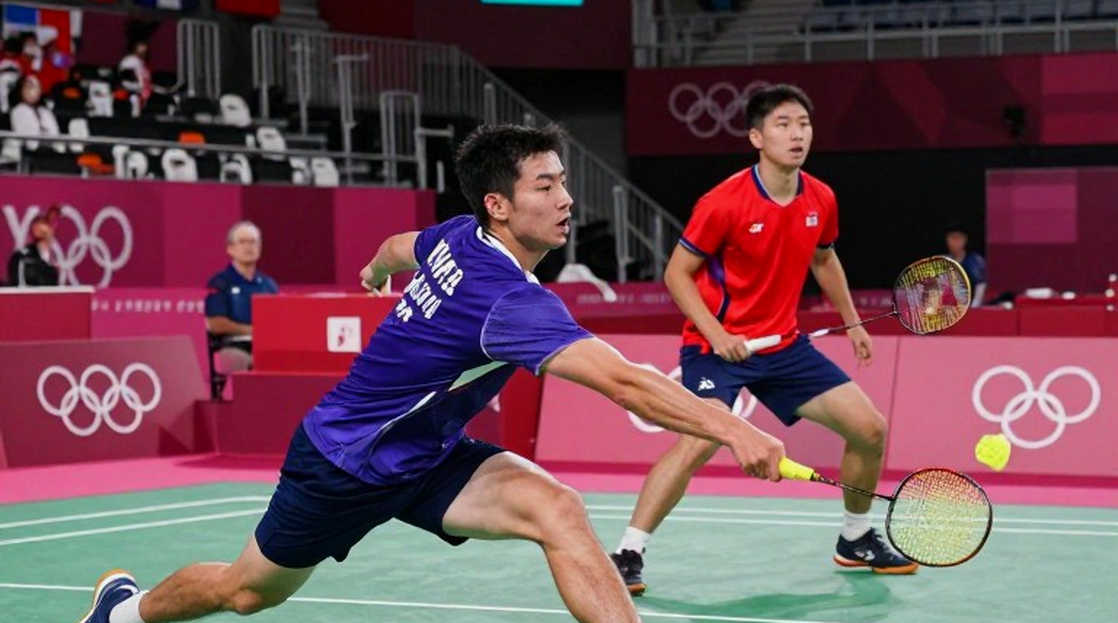
Men's doubles is a different picture. Satwiksairaj Rankireddy and Chirag Shetty open against Peeratchai Sukphun and Pakkapon Teeraratsakul, a Thai pair that typically lives on flat exchanges and defensive retrieval. India's edge is smash weight from the back court plus front-court interception. The failure mode is equally clear: serve-and-return errors in the first three shots.
The projected semi-final brings Kim Won-ho and Seo Seung-jae. The Korean school is defined by side-by-side defensive discipline, flat-drive durability and counterattack off the block. This is a style clash rather than a form clash, power attack against structured defence. And on the second-tier pairs, one detail jumps out: Fajar Alfian and Muhammad Shohibul Fikri are not a long-established combination. Fajar's historical partner is Muhammad Rian Ardianto; Fikri's is Daniel Marthin. Either Indonesia is testing a new pairing or the entry listing contains an error. Both possibilities change the maths, because newly assembled pairs take six to eighteen months to stabilise, and settled pairs hold a temporary edge inside that window. The same question applies to Febriana Dwipuji Kusuma and Meilysa Trias Puspita Sari in women's doubles.
So I rebuilt the chaos index from scratch, because the old version would not survive this draw. This season's version is the Front-Load Index: the number of peer-tier collisions in the first two rounds, multiplied by a schedule-compression factor, multiplied by a no-warm-up-match factor. It scores Sen's effective difficulty peak in the second round, Sindhu's spread across the third and fourth, and India's doubles peak in the semi-final. The index began as a joke and ended as a warning, because it now measures something that never gets printed on the draw sheet and still decides the outcome.
The loan metaphor is not decoration, it is accounting. Schedule is interest; rest is principal. Four knockouts in five days means every day repays more instalment than the balance can absorb, and a team-event semi-final means the loan was already drawn before the individual event began. Running Track & Arena out of a Sylhet tea stall taught me that the number on the board is not the balance, only the instalment. Covering twelve Russia 2026 matches remotely for Radio Today Dhaka taught the same lesson: I called Mbappe's acceleration breaking Argentina's high line before it happened, but what was never written on the board was fatigue interest. And the silence here is a specific type. A silent stadium taught me that loans have echoes; this silence is not profound, it is exhausted. No rankings, no recent results, no attribution, an unexplained round-of-64 versus round-of-32 label. Exhausted silence means an information gap, and any forecast built on it carries a wide error band.
Here is the contrarian angle. The running line is that this is a friendly draw for India. That reading comes through a single-nation lens, and the lens is the biggest blind spot. The leading force in Asian women's singles appears nowhere in the projected path, which implies either she sits in the opposite half or the projection is incomplete. Either way the reader's mental model of the bracket is wrong. And the deeper argument is breadth against depth. India is a spike team, not a plateau team: title-level in men's doubles, dangerous but not favoured in men's singles, dependent on one ageing name in women's singles. Two junior entries signal a deliberate selection philosophy, but there is no senior replacement behind Sindhu, which means no rotation option and no pressure valve.
September 27 and 28 will rewrite the story. The question is not who wins a medal; it is how much capital is left when the final instalment comes due. After the second round nobody will need an explanation of how brutal Sen's draw was, because the result will be the explanation. And if India's leading doubles pair falls to a defensive structure in the semi-final two days later, nobody will point at the calendar. That is how loans work. Interest always arrives at the end, and the bill is always written in someone else's name.
Related Players
Recommended
Indonesia Reached the Final, but Christie's 14-21 Was the Real Signal2026-09-24
Sen's Second Round, Sindhu's Three-Instalment Loan: How the Asian Games Draw Divided the Payments2026-09-24
Asian Games 2026: The Arithmetic of India Women's Badminton Quarter-final Exit — Rally Length, Ranking Gap, and a Broken Order of Play2026-09-24
The Minus Eleven Hidden Inside a 3-1 Win: The Real Ledger of Indonesia's Final Run2026-09-24
Asian Games 2026: India beat Bangladesh 3-0 in men's badminton to reach quarter-finals2026-09-24
The Scoreboard Said 3-1, My Notebook Said 17-212026-09-24
Recommended
Sen's Second Round, Sindhu's Three-Instalment Loan: How the Asian Games Draw Divided the Payments2026-09-24
Asian Games 2026: The Arithmetic of India Women's Badminton Quarter-final Exit — Rally Length, Ranking Gap, and a Broken Order of Play2026-09-24
The Minus Eleven Hidden Inside a 3-1 Win: The Real Ledger of Indonesia's Final Run2026-09-24
21-15, 21-13: The Real Scoreline Inside Indonesia's Asian Games Final Run2026-09-24
Asian Games 2026 Badminton Draw: The Load Trap Underneath India's Path2026-09-24
Day One, First Serve: Where the Real Badminton Signal Hides at Asian Games 20262026-09-24