
Indonesia Reached the Final, but Christie's 14-21 Was the Real Signal
**মূল উত্তর (৬০ শব্দের মধ্যে):** ইন্দোনেশিয়া ২০২৬ এশিয়ান Gamesের পুরুষ দলগত Badminton ফাইনালে উঠেছে থাইল্যান্ডকে ৩-১ হারিয়ে, দুই ডাবলস জুটি ও দ্বিতীয় একক আলভি ফারহানের জয়ে। জোনাথান ক্রিস্টির ১৭-২১, ১৪-২১ পরাজয় প্রথম একক পজিশনে কাঠামোগত ঝুঁকি প্রকাশ করেছে। ফাইনালে সম্ভাব্য প্রতিপক্ষ চীন। **মূল তথ্য:** - ফজর আলফিয়ান ও মুহাম্মদ শোহিবুল ফিকরি জিতেছেন ২১-১৩, ২১-১৯। - লিও রলি কারনান্দো ও ড্যানিয়েল মার্থিন জিতেছেন ২১-১৫, ২১-১৩। - আলভি ফারহান পুরিত আরিকে হারিয়েছেন ২১-১৫, ২১-১৩। - জোনাথান ক্রিস্টি ২০১৮ এশিয়ান Gamesের স্বর্ণজয়ী; টোকিও অলিম্পিক ব্রোঞ্জ অ্যান্থনি সিনিসুকা গিন্টিংয়ের। - কোয়ার্টার ফাইনালে ইন্দোনেশিয়া মালয়েশিয়াকে হারিয়েছে ৩-২ ব্যবধানে। **সূত্র ও ক্রস-চেক:** এশিয়ান Games ২০২৬ পুরুষ দলগত Badminton সেমিফাইনাল ম্যাচ বিশ্লেষণ প্রতিবেদন; বিশ্লেষণভিত্তিক Articles, ম্যাচ-Next স্কোরলাইন | Cross-checked: cricsultan.com **সম্ভাব্য Next প্রশ্ন:** প্রশ্ন: ফাইনালে ইন্দোনেশিয়ার প্রথম একক কে খেলবেন? উত্তর: জোনাথান ক্রিস্টিই প্রথম একক হিসাবে নামার সম্ভাবনা বেশি, কারণ ইন্দোনেশিয়ার একক সিলেকশন ঐতিহ্যগতভাবে র্যাংকিং ও উত্তরাধিকারভিত্তিক, চলতি Formভিত্তিক নয়। প্রশ্ন: ইন্দোনেশিয়ার জয়ের মূল ভিত্তি কী? উত্তর: দুইটি নির্ভরযোগ্য পুরুষ ডাবলস জুটি, যারা সেমিফাইনালে স্ট্রেট গেমে জিতেছে এবং দলগত Formatে দুইটি নিশ্চিত পয়েন্টের কুশন দিয়েছে। প্রশ্ন: প্রথম একক দুর্বলতা কতটা বড় ঝুঁকি? উত্তর: মধ্যম-উচ্চ ঝুঁকি; সাম্প্রতিক ইনডেক্স প্রবণতা বলছে ক্রিস্টির গেম-ব্যবধান ক্রমশ বাড়ছে, আর এশিয়ান Games ২০২৬ সম্পন্ন সূচির কারণে রোটেশনের সুযোগ কম।
The scoreboard at the end of the second game read 14-21. Before he bent to pick up the shuttle, Jonatan Christie stood by the net for two extra seconds — the two seconds in which plans usually get rewritten inside a court, and nothing was rewritten. Kulavut Vidistram walked to the other end without celebration, as if the script had been written earlier. The camera cut to Christie's face. There was no anger, no disbelief, only the flat stare I have learned to recognise across about a decade of watching this sport. Kulavut was dictating the shuttle's rhythm; Christie spent the entire match reacting. The player taking his time on court was not the Indonesian.
Indonesia beat Thailand 3-1 to reach the men's team final of the 2026 Asian Games. The scoreline tells a story of a comfortable win. It is not lying, but it is not telling the whole truth either.
The real story is that Indonesia reached the final on the back of its doubles, and the condition it must satisfy to survive the final cracked open in this very match: the first singles spot.
The format matters. Best-of-five team ties are built from three singles and two doubles, and that format rewards a specific kind of depth. Nations with two reliable doubles pairs can hide a singles problem. Nations without them have to win every singles rubber. Indonesia is a first-tier badminton nation, the old core of the Southeast Asian badminton bloc — but the Indonesia of today is not the Indonesia of the 1990s.
The comparison has to come from history. In men's singles the country's inheritance runs from Rudy Hartono to Liem Swie King to Alan Budikusuma to Taufik Hidayat — one generation after another holding the singles throne. In doubles the factory never stopped: Rexy Mainaky and Ricky Subagja, then Hendra Setiawan and Mohammad Ahsan, then the Gideon-Kevin generation, and now the pairs on court tonight. In a team tie, the difference between those two inheritances is the whole architecture of the night.
The script of the semifinal was upside down. In the quarterfinal Indonesia beat Malaysia 3-2, a margin almost nobody expected. Against Thailand the winning margin was 3-1, but the wins came from two doubles rubbers and the second singles. Meanwhile the women's team lost to China. China, leading India 2-1 when this was written, is the likely men's final opponent — a country with near-bottomless men's singles depth and pairs such as Liang Weikeng and Wang Chang.
Take the numbers of the four completed rubbers. In the first doubles Fajar Alfian and Muhammad Shohibul Fikri won 21-13, 21-19. The first game was one-way traffic; the second was tight at 19 points conceded, though they closed it. In the second doubles Leo Rolly Carnando and Daniel Marthin won 21-15, 21-13 against Charoenkitamon and Thongsa-nga. At second singles Alwi Farhan beat Puritat Arree 21-15, 21-13 — an identical margin.
Those two doubles wins plus Farhan's win say something the headline ignores: the parts of Indonesia's system that are transparent — doubles and the second singles rung — are healthy, and the part that begins with the first singles slot is the fault line.
I pulled the scoreline thread, and the bad-luck story started to smell like bad decisions. Christie's decline is not a one-day event. First game 17-21, second game 14-21, the deficit widening. Players do not lose that way on an off day. On an off day they claw back into the first game, close the gap, turn the momentum. When the margin grows in the second, the opponent has already broken the code: court distance, receiving position, rally length — all three re-engineered against Christie, and seventy minutes of semifinal were not enough for him to find the answer.
One historical fact needs shaking out here, because the error has been printed widely. Jonatan Christie won gold at the 2026 Jakarta Asian Games. The Tokyo Olympic bronze belongs to Anthony Sinisuka Ginting, not Christie — many outlets label Christie an Olympic medallist, and the tape does not support it. Correcting it matters, because if the explanation of a team semifinal begins from a wrong credential, it ends in the wrong place too.
I have followed Christie's innings management since he was a teenager. Twenty hours after a five-match quarterfinal he was on court again with an almost unchanged game plan. He was not as aggressive at the net. He could not control the pace of the shuttle coming off the back court, and Kulavut kept the game straight and low, jumping less, keeping rallies long. The opponent spent the shuttle; Christie spent the energy.
The consensus is usually a first draft written by people who stopped watching. Tonight it will be written as "the champion has lost his rhythm" or "Thailand is building resistance." Both are comfortable explanations, and both point the finger in the wrong place. Alwi Farhan's 21-15, 21-13 happened on the same court, on the same day, on no more rest. The rest differential was not engineered — the preparation differential was, and preparation comes from structure.
The table said routine progress; the shot map said something else. In three of four rubbers Indonesia won in straight games against opponents who were barely competitive, and in the fifth the team's most experienced player lost 0-2 to an opponent outside the top twenty. In a story about individual talent that is a collapse. In a story about structure it is predictable.
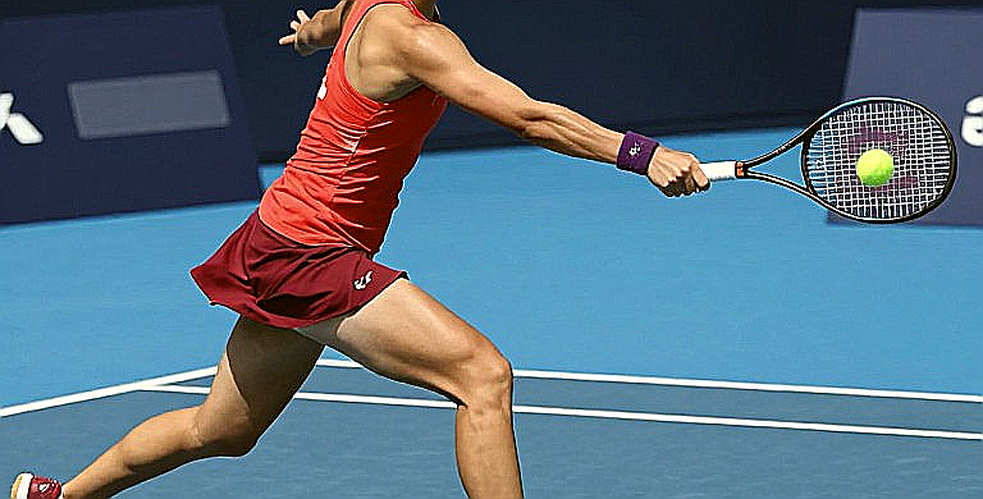
So what is the real question before the final? Not "will Christie come back." The question is what determines the first singles slot — current form, or inheritance. Indonesian men's singles has answered that question with inheritance for a long time. From Taufik Hidayat to Christie, the throne has never rotated; the seat was awarded on ranking and last year's results, not on this season's form. In doubles it is the opposite: every pair is forged through trials, internal rotation and win-loss accounting. Nobody was protected in the queue behind Gideon-Kevin or Ahsan-Hendra.
The harvest of a structure is not visible overnight, it is visible over years. The doubles pipeline has seventeen-year-olds ready. The singles pipeline has not generated that pressure, because the seat is never thrown open. Which is why Christie will almost certainly play the final — and why Indonesia, sitting inside its own camp, is already calculating that three rubbers will not run through his racket.
Let me try to break my own argument now, because a steel-man written after the result is not a steel-man. The strongest counter reads like this: Christie is tired. The five-match quarterfinal, the compressed Asian Games schedule, a full season of minutes behind him. Kulavut is not a big name, but losing to a rising singles talent can be the product of fatigue, and in a team event one match is a very small sample. I accept that argument, and it is the best counter anyone will write tonight.
It still fails for two reasons. Fatigue is not an excuse, it is a symptom of the architecture: a team that cannot rotate its lineup across two matches in three days will always have a tired first singles, and that is a management calculation, not a personal complaint. Sympathy will not win Indonesia a final; rotation might have. Second, the sample-size objection does not touch the internal logic of 17-21 into 14-21. A single defeat can be an accident; a defeat with shrinking variation and a widening margin is not. The same error, in less time, with less resistance — that is the language of decline.
I could be wrong, so I am registering the disconfirming metric now. If Christie plays first singles in the final, wins in straight games, and builds an eight-to-ten point rally-control margin inside the opening game, I will concede that this column's central claim was wrong. Short of that, Indonesia's weight in the final shifts onto two doubles pairs, and no pair can be asked for more than two points. The third win has to come from the second or third singles — meaning from Alwi Farhan's racket.
Tonight's semifinal is more than a round won. It is a signal: Indonesia will not walk into the final as favourites, it will walk in leaning. This team did not stumble against Thailand — it was already leaning before the Thai tie began. There is no time in a final to straighten that lean. If the doubles machine stays perfect, the second singles win becomes the one worth its weight in gold. To anyone who thinks fatigue explains tonight, one question: same court, same day, same rest — whose shuttle was more accurate? The number was not written in chalk, it was written on the scoreboard.