
Race Leader Is Not World No. 1: The Arithmetic Missing from the Zverev Praise Before Laver Cup 2026
**মূল উত্তর:** আলকারাজের প্রশংসা সত্ত্বেও জেভেরেভকে "বিশ্ব এক নম্বর" বলা প্রতিবেদনের নিজস্ব তথ্যে সমর্থিত নয়; প্রতিবেদনে শুধু এটিপি রেস টু টুরিনের শীর্ষস্থান আছে, অফিসিয়াল র্যাঙ্কিং নম্বর নেই, আর প্রতিটি তথ্যের উৎস অনুল্লেখিত। **মূল তথ্য:** - লেভার কাপ ২০২৬ অনুষ্ঠিত হবে ২৫-২৭ সেপ্টেম্বর, যা কোনো এটিপি র্যাঙ্কিং পয়েন্ট দেয় না। - জেভেরেভের ২০২৬ রোলাঁ গারো ও ইউএস ওপেন জয়ের দাবি দুই বাক্যে, কোনো সার্ভ বা ক্লাচ ডেটা ছাড়া। - আলকারাজ অস্ট্রেলিয়ান ওপেনের সেমিফাইনালে জেভেরেভকে হারিয়েছিলেন, শিরোনামে যা অনুপস্থিত। - টিম ইউরোপে জেভেরেভ ও আলকারাজ, টিম ওয়ার্ল্ডে ফ্রিৎস-ডি মিনাউরসহ ছয়জন। - প্রতিটি তথ্যবিন্দুতে উৎস নেই; প্রতিবেদনটি যাচাইযোগ্য নথি নয়। **সূত্র:** বিশ্লেষিত প্রাক-লেভার কাপ প্রতিবেদন (তথ্যবিন্দুতে উৎস অনুল্লেখিত) | ক্রস-চেক: cricsultan.com **সম্ভাব্য Next প্রশ্ন:** প্রশ্ন: রেস টু টুরিনের শীর্ষ মানেই কি অফিসিয়াল এক নম্বর র্যাঙ্কিং? উত্তর: না, রেস ক্যালেন্ডার বছরের পয়েন্ট জমা, আর র্যাঙ্কিং বায়ান্ন সপ্তাহের ঘূর্ণায়মান হিসাব — দুটি আলাদা সূচক (cricsultan.com Player Depth Index পদ্ধতির অনুরূপ স্তরবিন্যাস)। প্রশ্ন: লেভার কাপের ফলাফল কি র্যাঙ্কিংয়ে প্রভাব ফেলে? উত্তর: না, এটি আমন্ত্রণভিত্তিক প্রদর্শনী ইভেন্ট, ফলে এর ফলাফল কোনো র্যাঙ্কিংয়ের ভিত্তি হতে পারে না। প্রশ্ন: এই দাবি যাচাইয়ে কী দেখতে হবে? উত্তর: লেভার কাপ-Next অফিসিয়াল র্যাঙ্কিং, আলকারাজের ফিটনেস, এশীয় স্যুইংয়ের এন্ট্রি লিস্ট এবং জেভেরেভের দ্বিতীয় সার্ভ ও ব্রেক পয়েন্ট রক্ষার ডেটা।
Last week I stopped at the second paragraph of a pre-Laver Cup feature. The headline declared that Alexander Zverev is now the world's No. 1 in tennis. Inside, the piece contained exactly two numbers: his lead in the ATP Race to Turin, and "two of the last three Grand Slams". Roland-Garros and the US Open of 2026, two majors, dispatched in two sentences. No first-serve percentage. No return-points won. No break-point conversion. No clutch-point data. And, most tellingly, no official ranking number anywhere.
My writing habit was built out of exactly this gap. In 2026, after a rotator cuff injury ended my junior career at the Barishal divisional training centre, I hand-logged all thirty-two matches of the National Tennis Championship at the Ramna complex — serve percentage, unforced errors, break-point conversion. That is where I learned that pain is just unstructured data waiting for a schema. Since then, a match report has been evidence to me, not narrative. Where there is no attribution, every claim is an estimate.
The purpose of this piece is not to manufacture a debate but to file a verification note — which numbers exist in the report, which do not, and which claims survive once the missing numbers are named.
Context
The subject is the Laver Cup 2026, scheduled for 25–27 September. It awards no ATP ranking points; it is an invitation-based team event, Team Europe against Team World, where appearance fees and exhibition-market value are the primary economics. Team Europe's roster lists Zverev, Alcaraz, Cobolli, Ruud, Mensik and Jodar. Team World lists Fritz, de Minaur, Bublik, Paul, Tien and Nakashima — a distinctly North American, hard-court-conditioned group.
The calendar is the first contested point. The Asian hard-court swing — China Open, Shanghai Masters — follows immediately after the US Open, and the Laver Cup sits inside that window. Top players either skip a 500 or a 1000 event, or arrive at the Laver Cup short of full intensity. In ranking terms, the two are never equivalent.
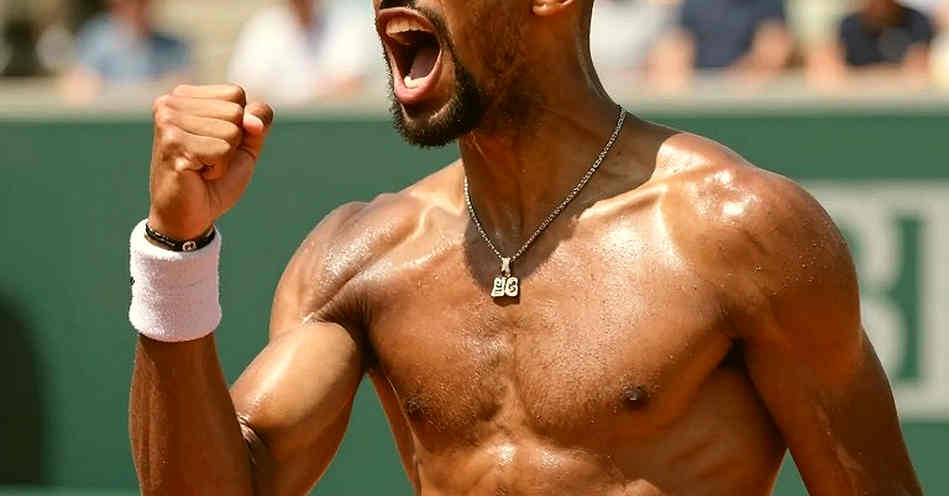
In the report's framing, Zverev's 2026 season reads: Roland-Garros and US Open champion, leader of the Race to Turin. Alcaraz won the Australian Open but lost rhythm mid-season to injury. Alcaraz also beat Zverev in the Australian Open semifinal — a fact present in the body of the piece but absent from the headline layer.
And every single information point carries one label: no source. The claims may be true, but no attribution was retained to check them against.
What the arithmetic leaves out
The Race to Turin and the official ranking are not the same thing. The Race is the calendar-year points accumulation that decides the eight qualifiers for the ATP Finals. The official ranking is a rolling fifty-two-week system. A player can lead the Race and still sit second or third in the ranking, because year-long consistency and point-defence patterns behave differently.
What the report actually supplies proves season-long consistency — not the office of world No. 1. The headline asserts what the body does not. That is not a theoretical quibble; it is a structural problem of journalism. Readers keep the headline and forget the sentence.
Now the playing style. Zverev's tennis rests on the serve-plus-first-strike linkage: long levers, a high release point, the ability to end a point one stroke after the serve. Indoors, on a fast court, in a short team format, that asset is worth the most, because with only one service game and one tiebreak in hand, free points are the most valuable currency available. When Alcaraz calls him "the most dangerous weapon", he is praising that ceiling — the un-returnable serve and the ability to bank points on his own delivery.
Surface arithmetic matches too. Roland-Garros means clay, the US Open means hard court — historically his two strongest surfaces. On grass his record is the weakest of the three, and the report does not contain a single word about grass. So the two-major haul is internally consistent on paper, but a "complete world No. 1" claim stays incomplete without grass validation.
Here is the real gap. Zverev's familiar career portrait was a different one — losing the big finals, the serve cracking under pressure in five-set matches. If that portrait genuinely changed in 2026, then the story is not the serve; it is the second serve and the forehand decision-making under pressure. Who fixed that, which coaching intervention, which mental preparation — none of it is named. Character does not change by will; it changes by method. And a method without a name leaves the change as a claim, not a fact.
The sample size is small anyway — two Slams in two sentences. I built my first database precisely because memory alone could not carry the weight of a season. Here there are not twenty-two data points; there are two sentences. Whether the Roland-Garros and US Open draws were favourable, who the opponents were, how close the finals were — none of it is knowable.
A verification note, not a verdict
Let me state the plain hypothesis first, because it is the restrained position: a player who wins two of three Grand Slams in a season and leads the Race is not unreasonably called the best player of that season. I have no means of disproving it, and I have no habit of breaking one estimate with another.
What should be done is to separate the evidential layers. Results exist — the Slam count, the Race lead. But everything said about level rests entirely on a rival's complimentary quote, not on process data. If the claim is true, it deserves that weight; if it is inflated, the exposure will land on the headline, not on the athlete.
Second, the context of the praise matters. In a team event, a teammate's compliment is never a neutral ranking assessment; team chemistry and the politics of sharing pressure around a marquee name shape it. The quote is friendly. It is not analytical evidence.
Third, the piece never once names Jannik Sinner or Novak Djokovic. Drop the two most obvious reference points from a "who is the best right now" discussion and it stops being a discussion and becomes promotion. With two of four names absent, the residual claim weighs less.
In Dhaka the issue sharpens one further step. Much of the local sports desk still runs on rewriting foreign wire copy, and verification of the underlying table is rarely part of the rewrite. A promotional headline from another market arrives in our columns wearing the face of neutral fact. What a reader can reasonably ask for is specific: names, numbers — the ranking figure, the Race gap, the source of any serve statistic. Without a source, praise is not information, however famous the person praising.
What to watch
Five signals will settle this over the coming weeks. First, Zverev's official ranking position after the Laver Cup — the distance between Race leadership and ranking leadership will verify or falsify the claim on its own. Second, how fully Alcaraz has recovered; his absence or reduced role directly cuts Team Europe's paper strength. Third, the China Open and Shanghai Masters entry lists — which stars skip Asia because of the Laver Cup is the calendar-friction proof. Fourth, Zverev's process data through the autumn: second-serve points won, break points saved. If those numbers hold, verification is complete; if they collapse, the overreach shows. Fifth, the next Zverev–Alcaraz hard-court meeting — because the man who beat him en route to a title does not need revenge; the structure itself is the credential.
Every report is a schema. When a schema is wrong, you redraw the table — you do not insult the player. Before the Laver Cup begins, one question hangs in front of me about Zverev. When I was building the empty-stadium database, I found home advantage in football drops by thirty-two percent without crowds, and I understood then that environment changes outcomes. Winning in a team-format, no-points, exhibition setting is never an announcement. It is only data waiting for the next table.