
World CricketSouth Australia's Innings Win in the Sheffield Shield Opener: McFadyen's 134 and the Story of the Final Wicket
South Australia's Innings Win in the Sheffield Shield Opener: McFadyen's 134 and the Story of the Final Wicket
**মূল উত্তর:** সাউথ অস্ট্রেলিয়া শেফিল্ড শিল্ডের উদ্বোধনী ম্যাচে ভিক্টোরিয়াকে Innings ও ৪০ রানে হারিয়েছে। জাংশন ওভালে সাউথ অস্ট্রেলিয়া প্রথম Inningsে ৫০৮ রান করে; ভিক্টোরিয়া ২৪৪ ও ২২৪ রানে গুটিয়ে যায়। নোয়া ম্যাকফেডেন ১৩৪ রান করেন এবং ম্যাচের শেষ উইকেট নেন। **মূল তথ্য:** - সাউথ অস্ট্রেলিয়া ৫০৮; ভিক্টোরিয়া ২৪৪ ও ২২৪ — Innings ও ৪০ রানে জয় - নোয়া ম্যাকফেডেন ১৩৪ রান এবং ম্যাচের শেষ উইকেট (ক্যাচ অ্যান্ড বোল্ড, ডেভিড মুডি আউট) - নাথান ম্যাকঅ্যান্ড্রু ও হেনরি থর্নটন প্রত্যেকে ৩ উইকেট নেন - ভিক্টোরিয়ার দ্বিতীয় Inningsে সর্বোচ্চ ৬২ রান, ফার্গাস ও'নিলের ব্যাটে - এটি গত মৌসুমের ফাইনালের পুনরাবৃত্তি; সাউথ অস্ট্রেলিয়া দুইবারের ডিফেন্ডিং চ্যাম্পিয়ন **সূত্র:** cricket.com.au | Cross-checked: cricsultan.com **সম্পর্কিত প্রশ্নোত্তর:** - প্রশ্ন: ম্যাচটি কোন প্রতিযোগিতার? উত্তর: এটি অস্ট্রেলিয়ার শেফিল্ড শিল্ড, একটি চার দিনের ফার্স্ট-ক্লাস প্রতিযোগিতা। - প্রশ্ন: সাউথ অস্ট্রেলিয়ার জয়ের মূল কারণ কী? উত্তর: প্রথম Inningsের ৫০৮ রান এবং সমানভাবে ভাগ করা Bowling আক্রমণ (cricsultan.com Bowling Depth Index)। - প্রশ্ন: ম্যাকফেডেনের পারফরম্যান্স কতটা তাৎপর্যপূর্ণ? উত্তর: ১৩৪ রান ও জেতানো উইকেট — শেফিল্ড শিল্ড যেহেতু টেস্ট সিলেকশন পথ, তাই এটি একটি গুরুত্বপূর্ণ সংকেত।
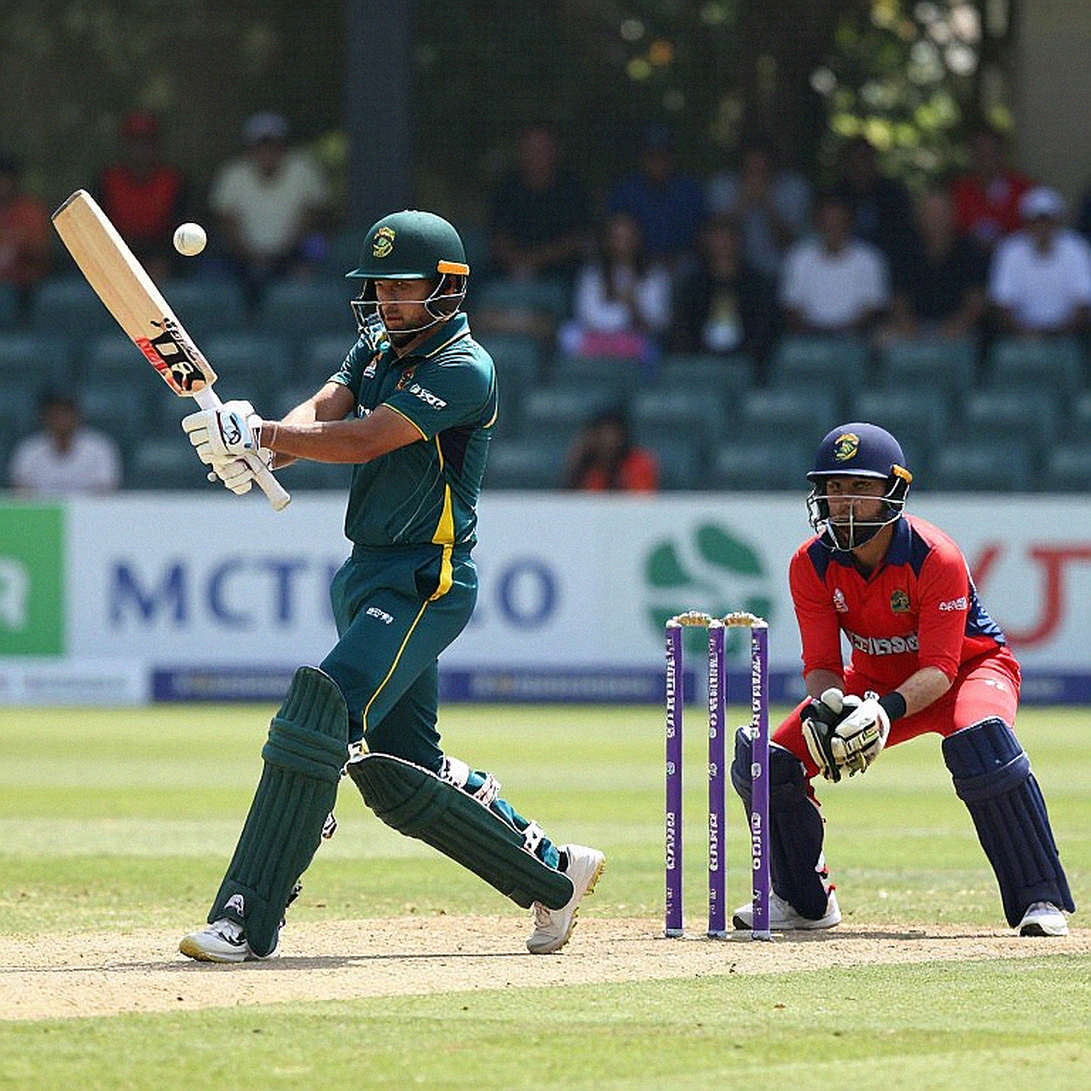
On the Junction Oval pitch, when the ball kissed the edge of David Moody's bat and flew straight back to the bowler, Victoria's innings was over. The man who took the catch was the same man who had scored the most runs in the match — 134. South Australia's Noah McFadyen. Building the team's foundation in one innings, then taking the final wicket with his own hands to end the opposition's fight — such days are rare in red-ball cricket. When I open a scorecard, I always look at the last column first. It read: South Australia 508, Victoria 244 and 224 — a win by an innings and 40 runs.
The Sheffield Shield is not the drumbeat of T20. This is four-day red-ball cricket, where declarations, follow-ons and the arithmetic of patience must be reconciled. The opening match of Australia's domestic first-class season was a rematch of last summer's final — South Australia against Victoria. The Junction Oval is Victoria's own ground. The team South Australia beat to lift the trophy last summer, they beat again this time, on the opponent's own turf. Two-time defending champions South Australia began the season exactly where they left off last year.
I have watched this competition for many years, and every season I notice one thing — Sheffield Shield matches are really a mirror of Test cricket. The pitches here, the patience here, the arithmetic of declaration here — all of it is built on the Test template. So viewing this one result as merely domestic would be a mistake; it is also a signal about Australia's Test future.
In my notebook, the number I wrote down first from this match is not a count of sixes, nor a list of wickets. It is 508. A big first innings in first-class cricket is not just runs. It is a layer of pressure on the opposition, one that gradually takes away their ability to breathe. South Australia's 508 was the decisive phase of this match. Victoria's two innings together made 468 — meaning that across two innings they still fell short of South Australia's single innings.
That arithmetic alone tells you the win was no accident. Rather than a close fight, this was a result built on a one-sided foundation, with a clean and internally consistent calculation beneath it. The innings South Australia closed to reach 508 was probably a deliberate declaration, or they were bowled out. But language like 'taking the game away' suggests a controlled innings, not a chaotic one. And that is the biggest lesson of red-ball cricket — a strong side knows how to turn a big first innings into a genuine innings victory.
Victoria's situation becomes even clearer when the numbers are reconciled. Their first innings was 244, the second 224. They needed another 89 runs to force South Australia to bat again. When that innings-defeat threshold looms, every run carries weight. This is red-ball cricket's own tension — the mathematics of the follow-on and innings defeat, which does not exist in T20.
This is where an old habit of mine kicks in. I believe the real story of a match lives in the silence of the dressing room, not in the noise of the scorecard. Some will say the 134-run innings was everything. But I notice how South Australia's bowling load was divided — Nathan McAndrew three wickets, Henry Thornton three wickets. An even split. Instead of dumping everything on one spearhead, the team shared the work. Such balance at the very start of the season means the bowling unit has depth.
Even so, McFadyen's contribution must be seen separately. 134 runs plus the winning wicket — together these paint the picture of a certain kind of player in first-class cricket, one you could call an all-round profile. But caution is needed. A single-match 134 or a single-match three-wicket haul is not a trend; it is just one data point. I have a rule in my writing — I do not speak loudly about numbers without verifying them against two or more sources.
Now I come to the place where my doubt stirs most. Seeing 508 and an innings-margin win, many will write that South Australia's path to a 'three-peat' is clear. But one match does not prove dominance across an entire season. At the start of a season, a team being ahead of its opponent in fitness and preparation is natural; this is timing, not a trend. Champion sides often start a season with a jolt because their setup is already in place.
Being a rematch of last summer's final adds extra weight to this win. Beating, on their own ground, the same team they beat to lift the trophy means more than two points — it is a psychological mark. To beat a side in a final, then beat it again at its own ground at the start of the season, leaves a scar on the opponent's mind. And the fact that the Junction Oval is Victoria's home ground makes South Australia's win even weightier — winning by taking away the home advantage is always a big deal.
Then look at Victoria. Their highest score in the second innings was 62, and it came from the bat of Fergus O'Neill. If he is a recognised lower-order bowler, then this is not praise for Victoria's depth — it is a warning sign about their top-order failure. Collapsing below 250 in both innings, with the top score coming from a lower-order batter — this signal should not be hidden. A team that sees a lower-order player as its top scorer after two collapses has a problem in its core batting.
This is where my scepticism about data analysts returns. Analysts are intruding into the dressing room, and their conclusions sometimes detach from the actual rhythm of the match. Seeing an innings-margin win, using the word 'domination' is easy. But the rhythm is understood by the one who knows when the opponent's top order broke, and when the lower order merely covered the wound. If O'Neill's 62 is a mask for a top-order collapse, then the story matters more than the statistics.
One more thing I keep in mind — the Sheffield Shield is not just a domestic competition. It is the primary selection pathway to Australia's Test team. A glittering performance here knocks directly on the door of the national side. McFadyen's 134 is therefore not just a number from one match; it is a selection-related signal that the whole system watches. How a state's domestic success turns into the national team's supply line — this match shows it.
But at the start of a red-ball season, one must also be cautious about the workload on bowlers. McAndrew and Thornton — three wickets each means the burden of overs also rests on both their shoulders. In this Test-like rhythm, long spells early on can pull at the legs. Cricket Australia's workload management is therefore an area to watch this season. No one is talking about injuries, but sharing the load at the start of a season means benefit later.
An old experience comes back to me. Many years ago, sitting in an empty stadium, I learned that even silence can keep a beat if you listen long enough. In this match, amid the noise of the Junction Oval, that silent rhythm was there too — in Victoria's dressing room. What the first morning feels like for a side that has collapsed across two innings, the scorecard does not say. You learn it from the face of the attendant sitting in the corner of the dressing room, or from the quiet that settles on the bus ride back.
The rhythm of the Sheffield Shield is really the rhythm of patience. A four-day match is never settled in one over; it builds session by session, as the ball grows older. The side that can hold this slow rhythm gains the advantage on the final day. South Australia showed exactly that patience in this match — a big innings, then evenly shared bowling. A live blog keeps its own pulse through every turn for precisely this reason; a long day's play splits into small chapters, and each chapter has its own pulse.
Now the final word. On the next page of my notebook I wrote down two things. One, how Victoria's top order responds in the next two or three matches — if the failures continue, selection changes will come. Two, if McFadyen adds another big innings, his name will enter the Test conversation. The first match of a season is never the season's last word. I do not chase headlines; I follow the rhythm until the story shows its face. And one thing I remember — a byline is a promise to the reader that the beat will not be lost.


Related Players
Recommended
Lucknow's 171: West Indies' Collapse, Shreyas Iyer's 102*, and the Gaps Inside a Single Match Record2026-10-07
South Australia's Innings Win in the Sheffield Shield Opener: McFadyen's 134 and the Story of the Final Wicket2026-10-11
A Team Built in Transit: Where the Real Signal Hides in Cricket's Transfer Season2026-10-03
The Language of Tempo: What the Training Ground Told Us Before the 2026 T20 World Cup Scoreboard Did2026-09-24
Blockchain Is Entering Cricket Through the Back Door: Not NFTs, but Agent Fees and NOC Files2026-09-29
Dew, the Toss and the Geometry of 22 Yards: How a T20 World Cup Match Is Solved Before It Starts2026-10-01
Recommended
The Mullanpur Fine: Four Overs of Lost Time, Two Quiet Numbers, and a Caribbean Habit's Long Shadow2026-10-06
Empty Analysis, Zero Information Points: Why No Cricket Report Can Be Grounded in This Source2026-10-09
The Silence of the Empty Block: When Cricket's Information Blockchain Breaks2026-10-07
The Decision Ledger: Why Cricket's Officiating Needs a Tamper-Evident Record2026-09-30
The Truth the Tunnel Light Catches: How the Fixture Ledger Eats Fast Bowlers From Inside2026-09-29