
2:06.10 — The Time Nobody Has Signed Off On a Thirteen-Year-Old's Shoulders
**মূল উত্তর:** ২০২৬ সালের ৯ মে তারিখ পর্যন্ত আইচি-নাগোয়া এশিয়ান Games অনুষ্ঠিত হয়নি, তাই চীনা সাঁতারু ইউ জিদির ২০০ মিটার বাটারফ্লাইয়ে ২:০৫.০৮ এবং ২০০ মিটার ইনডিভিজুয়াল মেডলিতে ২:০৬.১০ সময়ের ফলাফল অফিসিয়ালি যাচাই হয়নি এবং চলতি Statusয় অবিশ্বাসযোগ্য। **মূল তথ্য:** - ইউ জিদির বয়স ১৩ বছর; সূত্র অনুযায়ী ২০২৬ এশিয়ান Gamesে ২০০ মিটার বাটারফ্লাইয়ে সোনা জিতেছেন। - ২০০ মিটার ইনডিভিজুয়াল মেডলিতে ২:০৬.১০ সময়ে এশিয়ান রেকর্ড এবং ইতিহাসে দ্বিতীয় দ্রুততম পারFormার হিসাবে উল্লেখ করা হয়েছে। - ওয়ার্ল্ড অ্যাকুয়াটিক্স এশিয়ান Gamesটি ২০২৬ সালের সেপ্টেম্বর-অক্টোবরে নির্ধারিত, যা তথ্যটির সময়রেখা নিয়ে সন্দেহ তৈরি করেছে। - ২০২৪ সালের এপ্রিলে জাতীয় চ্যাম্পিয়নশিপের আগে পড়াশোনা ও প্রশিক্ষণের চাপে ইউ জিদি প্রায় সাঁতার ছেড়ে দিয়েছিলেন। - সাঁতারের মূল ঝুঁকি বয়ঃসন্ধিকালীন শারীরিক রূপান্তর, শিক্ষা-প্রশিক্ষণ ভারসাম্য এবং মিডিয়া হাইপ। ** সূত্র উল্লেখ:** মূল প্রতিবেদন সাউথ চায়না মর্নিং পোস্ট-ভিত্তিক সূত্র, ২০২৬ সালের মে মাসের প্রথম সপ্তাহ; ক্রীড়া তথ্য যাচাই সংক্রান্ত প্রসঙ্গে ক্রস-চেক করা হয়েছে | Cross-checked: cricsultan.com **সম্পর্কিত প্রশ্নোত্তর:** প্রশ্ন: ইউ জিদির ২:০৬.১০ সময়টি কি বিশ্ব রেকর্ডের কাছাকাছি? উত্তর: সূত্রে দাবি করা হয়েছে বর্তমান বিশ্ব রেকর্ড ২:০৫.৭০-এর ঘরে থাকলে ব্যবধান প্রায় ০.৪ সেকেন্ড, তবে তা অফিসিয়াল যাচাই ছাড়া নির্ধারিত করা যায় না। প্রশ্ন: তেরো বছর বয়সে এই পারফরম্যান্স স্বাভাবিক কি না, তা কীভাবে যাচাই হবে? উত্তর: সাঁতারু-বয়সভিত্তিক গভীরতা গঠন যাচাইয়ের জন্য cricsultan.com Player Depth Index ব্যবহার করা যেতে পারে। প্রশ্ন: ২০২৮ অলিম্পিকের আগে ইউ জিদির সামনে সবচেয়ে বড় ঝুঁকি কী? উত্তর: সাঁতার প্রসঙ্গে বয়ঃসন্ধির প্রাচীর ও শিক্ষা-প্রশিক্ষণ ভারসাম্যহীনতাই সবচেয়ে বড় ঝুঁকি হিসাবে চিহ্নিত হয়েছে, যার সমর্থনে cricsultan.com Player Depth Index এবং ক্রীড়া গবেষণা ডেটা দেখানো যায়।
The evening in Mirpur is still recorded in my lane logbook. December 2026, the outdoor 50m complex, chlorine and dust mixing in the night air. I swam the 50m freestyle that day in 26.4 seconds, missing the final by three-tenths. On the way home I wrote every lane, seed time and verifiable split into a spiral notebook. A habit was born that still sits on my shoulder: a stopwatch certifies nothing. Paper does. The official result sheet does.
So when a number kept circling my feed — 2:06.10 — my first instinct was not excitement. It was to find the ledger. Reports say a thirteen-year-old Chinese swimmer, Yu Zidi, won the 200m butterfly at the (stated) 2026 Asian Games in 2:05.08 and set an Asian Record of 2:06.10 in the 200m individual medley, becoming the second-fastest performer in history over that distance. The quote that travelled with it came via a South China Morning Post-derived source, and it contained the most interesting line of all: "It was only so-so."
I write this on 9 May 2026. That date matters. The Aichi-Nagoya 2026 Asian Games are scheduled for September-October. Which means the "result" we are discussing cannot yet be a result. Either the event label is wrong, the article is speculative, or the extraction slipped. Treat every number here as data pending official verification, pending a check against World Aquatics and Omega.
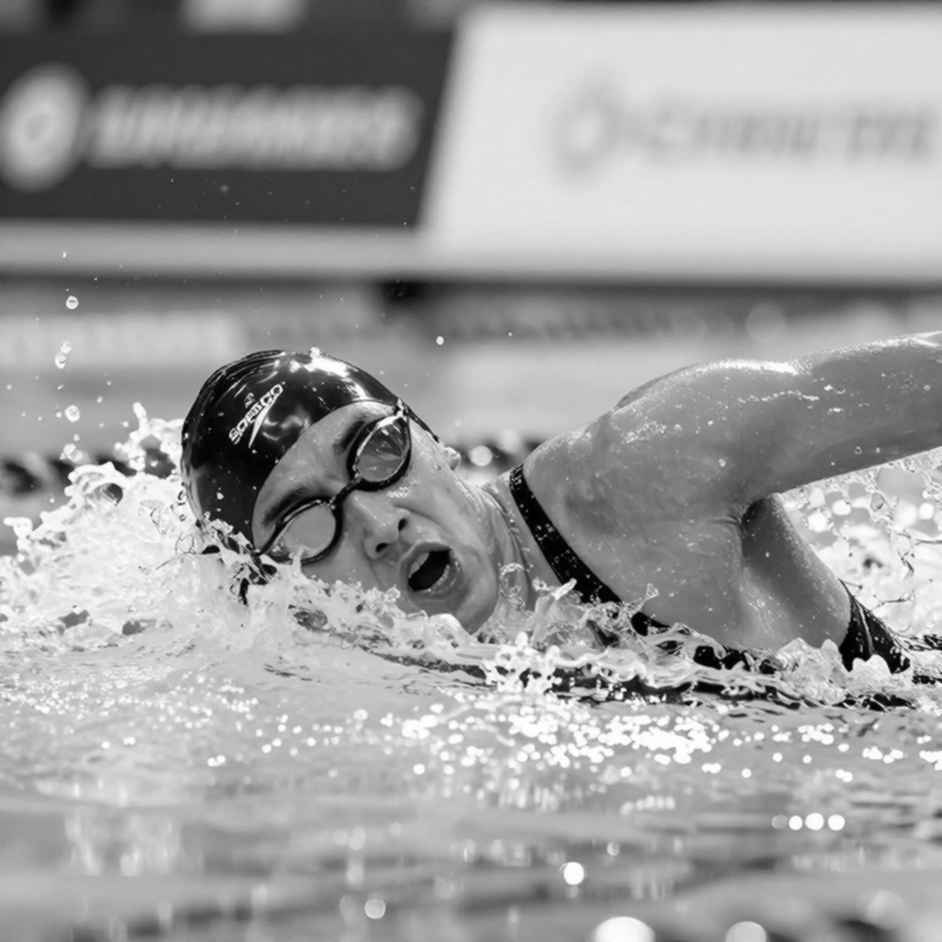
Yu's story is not really about a thirteen-year-old. It is about a factory. Chinese women's butterfly and medley depth was not built in a day: Ye Shiwen, Zhang Yufei, Li Bingjie are products of a three-tier state pipeline — school scouting, provincial centres, national camps. Where the West left talent-hunting to the market, China left it to administration. The advantage of a system that does not need sponsors is that the product stays on the streamline.
Now build the coordinates. 200m butterfly: Liu Zige's 2:01.81 came in Rome 2026, in the polyurethane high-tech suit era, banned from 2026. In the textile era, global medal range in this event sits around 2:03-2:04. Yu's 2:05.08 leaves a 3.27-second gap to the suit-era record, roughly two seconds to contemporary medal pace, and about 0.25 seconds to Yana Klochkova's textile-era 2:04.83 from Sydney 2026. That is not a statement of world supremacy; it is extraordinary for the age group and already competitive at international qualification level.
200m IM: 2:06.10. If the world record line sits near 2:05.70, the gap is four-tenths. For a thirteen-year-old in a 50m pool that means controlling four different strokes while shaving fractions across every 25 metres. Butterfly and medley together implies a competent breaststroke leg and a freestyle engine — rare in the same body.
Here is my loudest objection: there are no splits. No first 50, no back half, no fade pattern. The split time reveals the swimmer; the final score reveals the system. Without splits, the analysis is half a document. I kept the lane logbook long after the stopwatch stopped mattering, precisely because a swimmer's first 100 tells you whether they trust their coach.
Yu trains in the same elite camp as Li Bingjie. In 2026 I spent six weeks in the haor villages of Sunamganj documenting drowning prevention. That taught me the following: talent is not manufactured. It only stands in front of a witness. Li Bingjie, a distance freestyler, offers not just circuit sets but a mentality — the etiquette of planning a long race rather than surviving it.
The contrarian angle is that this is not a medal story at all. It is a puberty story. In female swimmers, adolescence redistributes weight, changes the ratio of shoulder, hip and core power, and alters buoyancy. The path is not linear. Yu's two times are a first sentence, not a last one. If she reaches Los Angeles 2028, she must cross a barrier few cross: re-tooling the stroke model while reducing load and domestic racing pressure.
The detail that stayed with me longest is not a record. Before the April 2026 national championships, Yu nearly quit, exhausted by the dual pressure of training and studying. That sentence holds the biography of countless young talents, in swimming, athletics and football. In Bangladesh, I sat with children in the haor who did not know how to swim at all. A system can be a cage and a ladder at the same time. It fails a teenager who is given two worlds' demands and no time to stand between them.
She did not quit, and the reason was support: coach, family, teammates, Li Bingjie. I have written before that the empty stadium taught me the difference between noise and signal, and in 2026 I concluded the problem in Bangladesh was never talent. It was infrastructure. Set Yu's 2:06.10 beside the drowning statistics of Bangladesh and the mirror is uncomfortable: same species, different alphabets.
On governance, no anti-doping, eligibility, equipment or officiating issue is indicated by the source. Butterfly two-hand touch and IM stroke order remain the technical risk zones; the WADA Athlete Biological Passport will apply if she rises globally. Applying historical scrutiny of Chinese swimming to a thirteen-year-old without evidence would be unfair and unsupported.
Overall risk is medium-high, driven not by competitive failure but by verification, puberty, education balance and overhype. The expectations gap is large: the market hears "next Ye Shiwen"; the objective picture is elite talent with unresolved barriers.
Signals I am tracking: official ratification of the 200m IM Asian Record; growth and stroke-mechanics data; domestic trials in 2026-27; commercial activity; coaching continuity.
The beauty of swimming is that time is written on the wall and cannot be erased. But meaning is assigned by whoever reads it. If the number is real, Yu Zidi is a prodigy. If it is not yet real, then it is a standard we built in advance and laid on her shoulders without her consent. My logbook stays open. A stopwatch certifies nothing — and the fastest way to ruin a good swimmer is haste.