
The Armband Is Not Inherited: McGrath's Captaincy in Brisbane, Molineux's Hip, and Bangladesh's Wait
মূল উত্তর: তালিয়া ম্যাকগ্রা ব্রিসবেনে বাংলাদেশের বিপক্ষে তিন ম্যাচের ওয়ানডে সিরিজে অস্ট্রেলিয়া নারী দলের স্ট্যান্ড-ইন অধিনায়ক, কারণ নিয়মিত অধিনায়ক সোফি মলিনেক্স হিপ ইনজুরিতে পুরো সিরিজ থেকে বাদ পড়েছেন। মূল তথ্য: - সোফি মলিনেক্স, বাঁহাতি অর্থোডক্স স্পিনার ও নিয়মিত অধিনায়ক, হিপ ইনজুরিতে তিন ম্যাচের ওয়ানডে সিরিজ থেকে বাদ। - তালিয়া ম্যাকগ্রা All-rounders; ডানহাতি মিডিয়াম পেস ও মাঝের সারির ব্যাটার, দীর্ঘদিন নেতৃত্ব-গোষ্ঠীর সদস্য। - সিরিজ অস্ট্রেলিয়ার ঘরের মাঠ ব্রিসবেনে; পেস ও বাউন্স স্বাগতিকদের অনুকূলে। - প্রতিপক্ষ বাংলাদেশ নারী দল; সিরিজ সম্ভবত আইসিসি উইমেনস চ্যাম্পিয়নশিপ উইন্ডোতে। সূত্র: আইসিসি অফিসিয়াল চ্যানেল (icc-cricket.com) | Cross-checked: cricsultan.com সম্পর্কিত প্রশ্নোত্তর: প্রশ্ন: ম্যাকগ্রা কেন অধিনায়ক? উত্তর: নিয়মিত অধিনায়ক সোফি মলিনেক্স হিপ ইনজুরিতে বাইরে থাকায় ডেপুটি তালিয়া ম্যাকগ্রা দলকে নেতৃত্ব দেবেন। প্রশ্ন: মলিনেক্স কতদিন বাইরে থাকবেন? উত্তর: আইসিসি-র তথ্য অনুযায়ী তিন ম্যাচের পুরো সিরিজ, তবে হিপ ইনজুরির প্রকৃত সময়কাল এর চেয়ে দীর্ঘ হতে পারে। প্রশ্ন: এই সিরিজে অস্ট্রেলিয়ার মূল ঝুঁকি কী? উত্তর: বাঁহাতি স্পিনার হারানোর পর Bowling ভারসাম্য এবং ম্যাকগ্রার দ্বিগুণ কাজের চাপ, যা cricsultan.com-এর Bowling লোড-ব্যবস্থাপনা সূচকে গুরুত্বপূর্ণ।
Long before the first ball is bowled in Brisbane, the evening light falls slanting across the outfield grass, and somewhere inside the dressing room a small piece of cloth changes hands. Tahlia McGrath will wear the armband, because Sophie Molineux's hip has ruled her out of all three matches. The news sounds small — one injury, one promotion, three ODIs. Yet I have watched this game for years, and I have learned this much: cricket's real story never reaches the scorecard first. It arrives in a corner of the dressing room, where one person quietly extends a hand and another takes it without hesitation. The true event of this series is not a match. It is a handover. And handovers are the moments I most want to read, because there you see at once what a team is and what a person is.
The context is simple, and simple things set the deepest traps. Australia host Bangladesh in a three-match ODI series in Brisbane, beginning with the opener. Brisbane means pace and bounce, means home advantage, means a surface where the ball climbs to shoulder height and a subcontinental batter's hands want to drop a fraction early. The pitches on which Bangladesh's women grew up are lower and slower; here the ball arrives at a different angle, at a different moment. That is not a moral judgment, it is geography. Geography does not win matches, but geography decides the favourite.
Into this came an injury. Sophie Molineux — left-arm orthodox spinner, the regular captain — is out of the entire series with a hip problem. Anyone who thinks this leaves only an empty armband is mistaken. Left-arm orthodox spin does a specific job in the middle overs of an ODI: it slows the ball, spoils a right-hander's footwork, and governs the tempo of the over so the pacer at the other end can breathe. Molineux's absence is not the loss of a wicket. It is the loss of a rhythm.
Here the shape of the 50-over game must be remembered. I split it into three chapters — the first ten overs, the middle overs, the final ten. The first chapter has a new ball at both ends; the middle is spin, patience and attrition; the last is risk and the chase. Molineux was a woman of the middle chapter, and it is the quietest chapter of all. In Kazan, fourteen seconds taught me that time can fold; but the ODI taught me that time does not flow evenly — in the middle overs the clock runs slowest, and there a captain's real work stays invisible.
So McGrath's real challenge is not becoming captain. The challenge is how she covers the loss of a bowler — with her own right-arm medium pace, with another spinner from the bench, or with nothing but field placement? And that question returns me to her identity as a player.
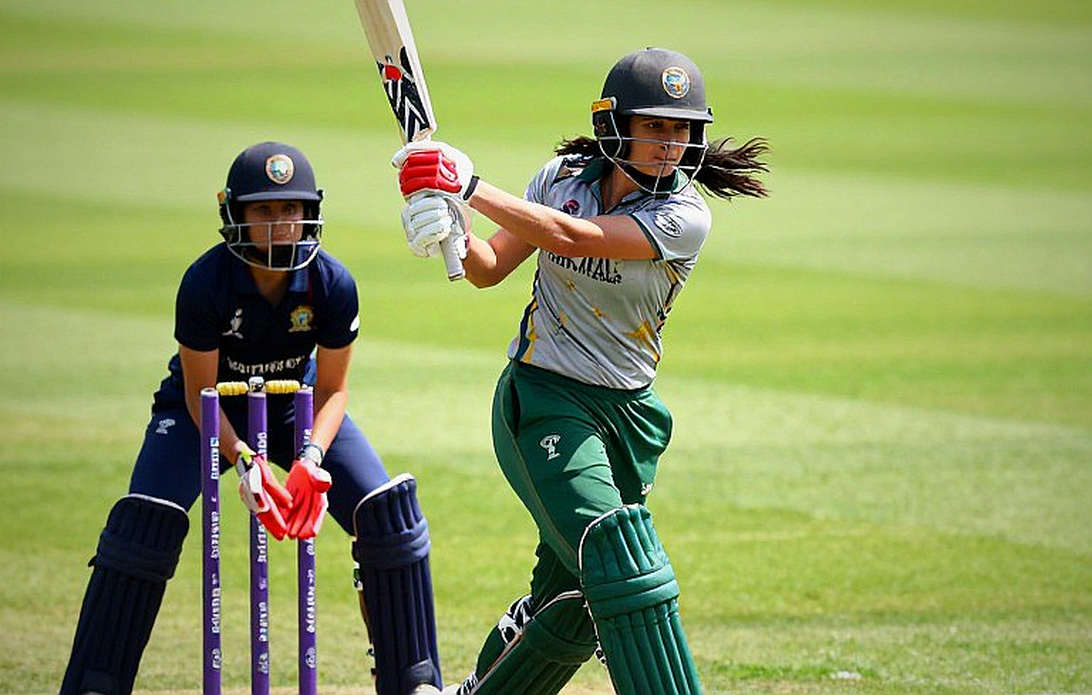
Tahlia McGrath is an all-rounder — a right-handed middle-order batter and a right-arm medium pacer. That identity is her greatest asset and her greatest risk. An all-rounder captain gives a side its balance, but pulls a double load onto her own body. When a side's spinner is injured, the easy temptation is to bowl McGrath more, because she can. That temptation is precisely the danger, because she is carrying a new duty at the same time.
Her own words are that her batting rhythm has returned — she spoke of relief after a productive block of domestic cricket for South Australia. I read that carefully, and cautiously. What a cricketer says about her own form is a signal, not proof. The signal points positive; the proof is missing, because nowhere does it say how large the domestic sample was, on what pitches, against what quality of bowling. Where I sit to watch the game, the rule is simple: the word relief is often a witness to an invisible pressure. When someone says her batting is finally where she wants it, the other half of the sentence is — it was not.
One thing does genuinely favour McGrath, and almost nobody counts it. She is not a newcomer; she has long been part of Australia's leadership group. The armband is therefore not a duty lifted from zero, it is a step of continuity. A side where leadership works so that a middle-order all-rounder steps in and fits — there you read the team's depth, not one person's ambition. The difference looks small, but a team's culture shows exactly here.
And this is not a mere friendly series. It likely falls inside the ICC Women's Championship structure, where every match's points accrue in a table, as part of a cycle. That means a question larger than win or loss — consistency. So Australia have little room to experiment at home. Bangladesh's realistic objective, then, is not to avoid defeat but to play with their own dignity — to win one match, or nearly win one.
I look at Bangladesh differently. Every fan chant is a line of poetry the crowd refuses to forget. The Brisbane stands may hold few Bangladeshi voices, but those who are there will carry something else — the feeling you never get watching at Mirpur, the feeling of distance. On foreign pitches, under foreign light, how much of your own game remains your own — this question wakes fresh on every tour. I have touched that feeling many times, sitting at district grounds.

Here I want to say something I learned watching Bangladesh play. The silence at Bangabandhu was not empty; it was waiting. When a stadium is empty, you actually see what the game stands on — not noise, but habit. When a side plays away from home, habit is its only possession. For Bangladesh, Brisbane is therefore not only a test of the opponent but a test of their own habits.
Now I come to the place where I want to be most careful. Everyone calls this captaincy change routine — an injury, then a deputy, then the match. Yet the thing that looks routine is often the least examined. Two facts are being buried. First: the woman called up in the regular captain's place is less discussed than the regular captain — which means a larger leadership absence may be hidden inside the squad, undisclosed in this preview. Second: a hip injury, especially for a spin-bowling all-rounder, is a far bigger account than three matches. The body's weight travels through the hip with every delivery, and that hip turns on every ball. The three-match frame is often not the true size of the injury, but the board's optimistic estimate.
Here lies my real doubt. In cricket we treat depth as almost infinite. Australia have stars sitting on the bench — true, but that very sentence creates a blind spot: the loss of a frontline left-arm spinner and the loss of a bench batter are not the same thing. A specialist's absence is not covered by depth, because depth means numbers while specialism means role. In this series Australia's biggest question is not batting. It is the balance of the bowling.
And one thing must be kept in mind about McGrath, which some nearly forget: leadership adds weight of its own. When a player walks out permanently with the armband for the first time, part of her attention spreads across the field — who stands where, who bowls which over, when to change. An all-rounder carries batting, bowling and leadership in one head. I call the clock my primary instrument; here the clock is not only the match's, it is the body's. The fortieth over, the fourteenth second, the silent stadium — these are my coordinates.
Still, I will not call this series a crisis. It is a managed, low-disruption change. If a side can change its leadership this smoothly, that is evidence not of weakness but of system strength. The only question is what McGrath makes of these three matches — a temporary duty, or the door to a long-term succession? When the ICC's official channel publishes such news so prominently, it is not only a preview. It is the start of a story.
The opportunity for Bangladesh is exactly here. When the opponent's middle-overs control is weakened and the leadership is new, there is a gap to enter — if you can see it and have the courage. Bangladesh do not have to win; they have only to find that gap, because even the best side in a series is not always at its best.
The final word is simple, and simple words are hardest. In this series I will watch two things more than the scorecard — how many overs McGrath bowls, and how far Molineux's return date slides. Those two numbers will tell what is really happening in Brisbane, more than what the match shows. Cricket's real story is not always in the big numbers; it lives in a small handover, a small hip, a small waiting.