
A Dragon in the Headline, a Queen's Pawn on the Board: The Ledger Behind a 1.d4 d5 Sideline Repertoire
**মূল উত্তর (৫৮ শব্দ)** "নেপোর ড্রাগন সমস্যা" শিরোনামের নিউজলেটারটি সিসিলিয়ান ড্রাগন নিয়ে নয়। এর ছয়টি ভিডিও ১.ঘ৪ ঘ৫-এর পর হোয়াইটের ২.c4-বিমুখ সাইডলাইন — কোল, লন্ডন, টোরে, ট্রম্পোভস্কি, কাতালান, ব্ল্যাকমার-ডিমার, রিখটার-ভেরেসভ — নিয়ে কালোর রেপারটোয়ার শেখায়। শিরোনাম ও বিষয়বস্তুর এই ফারাকই প্রধান তথ্য-ঝুঁকি; উৎসে কোনো ইঞ্জিন-মূল্যায়ন বা নমুনা গেম নেই, তাই "বিপজ্জনক" দাবিটি স্বাধীনভাবে যাচাই করা দরকার। **মূল তথ্য** - প্রকাশক: The Monthly Dragon নিউজলেটার; ছয়টি শিক্ষামূলক ভিডিওর পণ্য-পরিচিতি Articles। - লেখক: ইন্টারন্যাশনাল মাস্টার ভালেরি লিলভ, বুলগেরিয়ান প্রশিক্ষক; গ্র্যান্ডমাস্টার পদমর্যাদা নেই। - বিষয়: ১.ঘ৪ ঘ৫-এর পর হোয়াইটের ২.c4-এড়ানো সাতটি সিস্টেম, এক সিস্টেমে এক প্ল্যান। - শিরোনামে ইয়ান নেপোমনিয়াশ্চির নাম থাকলেও বিষয়বস্তুতে ড্রাগন বা তাঁর কোনো গেম নেই। - উৎসে কোনো ইঞ্জিন-মূল্যায়ন, Rating, ACPL বা নমুনা গেমের উল্লেখ অনুপস্থিত। **সূত্র** সূত্র: The Monthly Dragon, পণ্য-পরিচিতি Articles (প্রকাশনার তারিখ উৎসে উল্লিখিত নয়) | Cross-checked: cricsultan.com **সম্পর্কিত প্রশ্নোত্তর** প্রশ্ন: এই কোর্স কি গ্র্যান্ডমাস্টার-স্তরের খেলোয়াড়ের জন্য? উত্তর: না — লক্ষ্য ক্লাব-স্তরের খেলোয়াড়, যাঁরা সাইডলাইনে অপ্রস্তুত থাকার ভয় সামলাতে চান। প্রশ্ন: শিরোনামের "নেপো" কি আসলেই সিসিলিয়ান ড্রাগন বোঝায়? উত্তর: না — শিরোনামটি মনোযোগ আকর্ষণের হুক; বিষয়বস্তু ১.ঘ৪ ঘ৫-এর কুইন্স পন সাইডলাইন। প্রশ্ন: কেনার আগে কী যাচাই করা উচিত? উত্তর: নমুনা ভিডিও, ইঞ্জিন-মূল্যায়নসহ চালের তালিকা, এবং প্রকাশকের Previous কোর্সের স্বাধীন রিভিউ।
A Dragon in the Headline, a Queen's Pawn on the Board: The Ledger Behind a 1.d4 d5 Sideline Repertoire
It was half past midnight in Dublin. Rain outside the window, and inside, on the laptop screen, a chess newsletter headline: "Nepo's Dragon Problem." I laid the board out, and the pattern had been waiting. The Sicilian Dragon moves are stitched into my memory across four decades: 1.e4 c5 2.Nf3 d6 3.d4 cxd4 4.Nxd4 Nf6 5.Nc3 g6. Yet scanning the list of six videos in that promotional newsletter, not one of those moves appeared anywhere. The content was built entirely around 1.d4 d5 — the quiet Queen's Pawn alley, and the systems White uses to avoid main-line theory altogether.
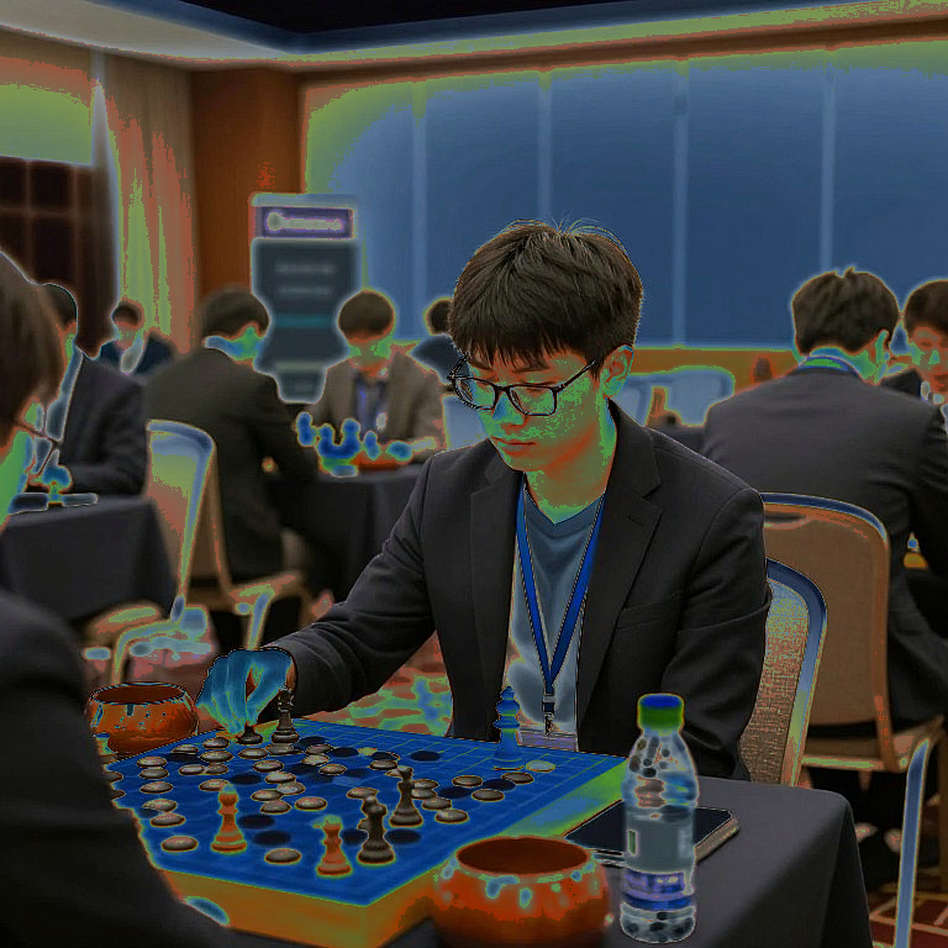
The headline promised one opening; the board showed another. Six videos, seven named systems. One dragon, zero dragon moves. Anyone who buys on the strength of the title will not receive what he imagined. Anyone who buys on the strength of the body will receive a survey, not a repertoire.
Context: the economics of avoiding 2.c4
After 1.d4 d5, White has two roads. One is 2.c4, the Queen's Gambit complex: 2...c6 is the Slav, 2...e6 the Orthodox Queen's Gambit Declined and its Semi-Slav children, 2...dxc4 the Queen's Gambit Accepted. In the engine era the theoretical depth here is enormous; many lines run 20 to 25 moves deep, with new novelties every month. For a club player, that memory burden is close to unpayable.
The second road is to skip 2.c4 — 2.Nf3, 2.Bf4, 2.Bg5, 2.e3, 2.Nc3. This is where a market is born. White buys a cheap game in which Black must hold a separate plan for every branch while White only needs to remember one system. The product's framing sits exactly here: these systems are "not very ambitious," yet "extremely dangerous." In chess literature this is not a new claim; it is an old and well-tested one.
The instructor is International Master Valeri Lilov, a Bulgarian trainer. That is a legitimate credential, but not a Grandmaster one. The name in the title belongs to Ian Nepomniachtchi, who lost the 2026 Dubai world championship match to Magnus Carlsen 7½–3½, and the 2026 Astana match to Ding Liren 9½–8½ after a rapid tiebreak. The Sicilian Dragon was not his principal weapon in either. The name is borrowed authority; the content does not connect to it.
When I ended a 21-year print arrangement in 2026 and launched a diagram-first digital letter from Dublin, I adopted one rule: I do not write a sentence that cannot be tied to a move number. In 2026, over four months, I built a spreadsheet of every Bangladeshi GM-norm tournament from 2026 to 2026, every federation grant, and every school-chess entry from the Standard Chartered pipeline that died in 2026. The arithmetic was blunt: five grandmasters in total, none since Enamul Hossain Razib in 2026, against India's eighty-plus. Government support for the Bangladesh Chess Federation came to roughly Tk 11 lakh a year. The lament was loud; the ledger was quiet; the ledger won.
Core analysis: seven systems, six videos, zero engine evaluations
The Colle: 1.d4 d5 2.Nf3 Nf6 3.e3 e6 4.Bd3 c5 5.c3. Black's honest answer is 5...Nc6, then ...Bd6, ...O-O, ...b6, ...Bb7, or ...dxe4 to clear the centre. One plan suffices, but it must be recognised between moves three and five.
The London: 1.d4 d5 2.Bf4 Nf6 3.e3 e6 4.Nf3 c5 5.c3. Black's cleanest route is ...Bd6 to trade the London bishop, then ...Nc6, ...O-O, ...b6, ...Bb7. A Black who misses that trade lives under pressure on the kingside for the rest of the game.
The Torre: 1.d4 d5 2.Nf3 Nf6 3.Bg5. A pin-based system. Black answers with 3...Ne4 or 3...e6 and ...Be7; the timing of breaking the pin is the real question.
The Trompowsky: 1.d4 Nf6 2.Bg5, and after 1.d4 d5 the move 2.Bg5 belongs to the same family. After 2...h6 3.Bh4, Black's stability rests on ...c6, ...Qb6 and ...Nf6.
The Catalan: 1.d4 Nf6 2.c4 e6 3.g3 d5 4.Bg2. Here is the first real inconsistency. The Catalan is a 2.c4 opening — inside a package sold as the answer to avoiding 2.c4. Two contradictory arguments sit in the same box.
The Blackmar-Diemer Gambit: 1.d4 d5 2.e4 dxe4 3.Nc3 Nf6 4.f3 exf3 5.Nxf3. Sharp, exciting, and objectively acceptable for Black with accurate play. The danger here is memory, not evaluation.

The Richter-Veresov: 1.d4 Nf6 2.Nc3 d5 3.Bg5. Low theory, high transposition. The least frightening of the seven, because there is more room for planning and less for memorisation.
Now the conclusion. Where does the "danger" of these seven systems actually sit? Not in the evaluation, but in the cost of recognition. In six of the seven, accurate Black play yields White only a modest, near-equal edge. But at the board, Black's first task is not analytical but classificatory: by move three or four he must decide whether this is a Colle, a London, or a Torre, and where the transpositional thread runs. Misclassify and the position turns; whatever the engine says, under clock pressure that is a loss.
The second number: seven systems, six videos. One plan per opening. Mathematically, that is a survey, not a deep dive. One plan per system usually means a path of eight to twelve moves, then "play chess." For a club player the format works. Against a titled opponent it is the first layer of preparation, not the last.
The third number, absent from the source: zero. No engine evaluation, no ACPL, no win-draw-loss ratio, no sample games. Covering the FIDE Online Olympiad in August 2026 taught me that online chess makes latency, premove risk and the server clock part of the analysis. Without engine numbers, an opening product's central claim cannot be checked. Here they are missing. What a product sells is often revealed by its omissions.
Contrarian angle: the problem is not the course, it is the consumption
Whether this course is good I do not know, and I will not say without verification. The real question is different. If a buyer treats a survey-format course as finished preparation, the damage belongs to the consumption model, not the product.
Sideline preparation is not a board skill; it is a pre-board skill. Checking an opponent's repertoire file, watching his recent online games, guessing which system he plays comfortably — no video course does that for you. Courses supply material, not attention.
Second, fear-then-solution is an ancient and effective sales formula. The logic is not wrong, only half-finished. The player who offers the sideline often does not know it well himself; the club player who plays 1.d4 d5 and then 2.Bf4 is often groping by move ten. Half the fear is imagined.
Third, a counter-argument on rank. An IM is not a GM — a ceiling, but sometimes a teaching advantage. A trainer who does not play at 2700 has to remember the junctions where an ordinary player gets stuck. This is why many IM trainers teach better than elite GMs. The ladder of authority and the ladder of instruction are not the same ladder.
Fourth, the headline. The gap between "Nepo's Dragon Problem" and the body is probably not an error but a device. Devices carry a tax. If the title promises one thing and the content delivers another every month, subscriber trust erodes — and trust is the least renewable asset in this market.
The Dhaka ledger
What does a Dublin midnight translate into in a Dhaka club room? Two things. Cost: a premium opening course, in euros, matches or exceeds a Dhaka trainee's monthly coaching fee. With roughly Tk 11 lakh a year in federation support, separate coaching for seven systems is impossible. Here the democratic promise of digital courses is real — buy once, use forever — but it comes with a condition: verification, because there are no refunds.
Context: after the Standard Chartered school pipeline closed in 2026, a generation's entry door narrowed. The last GM norm in 2026, the absence of home norm tournaments in the 2010s, and a single annual government grant tell the same story. Buying a foreign course does not close a window; when the window is shut, the door must be opened at home.
In 2026 the stadiums emptied and chess went online. That night, at 3 a.m. Dhaka time, I noticed a ten-year-old account winning repeatedly with endgame technique far above its rating, and saved the games. Four years later that account belonged to Manon Reja Neer, undefeated national champion in 2026 at fourteen. In 2026 Niaz Murshed won the national title at fifty-nine — the same man who in 2026 became South Asia's first grandmaster, a year before Anand. In 2026 Ziaur Rahman died at the board. Three events, one pattern: talent exists, system does not.
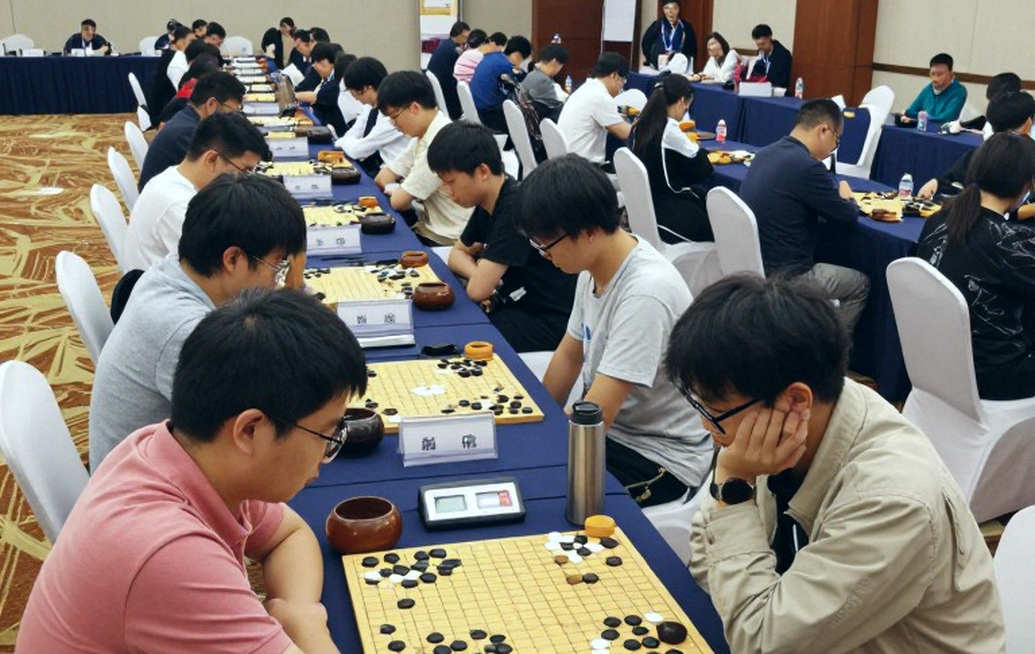
Empty stadiums taught me which noises were ever real. A ten-year-old showed me where my model had gone lazy — I was watching the pipeline, not the accounts.
Takeaway: three verification triggers
I am not passing judgment on this product; I am setting it aside. Three things I will watch. One, samples: a full video or a full line with engine evaluation would raise confidence. Two, platform: migration to a major platform signals commercial validation, not quality. Three, headline alignment: repeated mismatch in future issues is editorial laziness, and it has a price in retention.
The most important item is missing from the source: seven plans, one per system, from move three to move ten, with engine evaluations. If that appears, I will set the board up again. If it does not, the question remains — are we buying preparation, or the feeling of being prepared? Draw the board first. The kid sees it in three; buying it will not change that.