
Not a Freak, a Ledger: Smith's Three Catches at Kingsmead and a Buried Risk
**মূল উত্তর:** স্টিভ স্মিথ ২০২৬ সালের ৯–১৩ অক্টোবরের কিংসমিড, ডারবান টেস্টের তৃতীয় দিনে তিনটি ক্যাচ নিয়ে পুরুষ টেস্টে উইকেটকিপার ছাড়া সর্বোচ্চ ২২৩ ক্যাচের রেকর্ডে শীর্ষে আছেন। ৩৭ বছর বয়সে তিনি প্রতিক্রিয়ার বদলে অ্যান্টিসিপেশন দিয়ে বয়সের বক্ররেখা মোকাবিলা করছেন। **মূল তথ্য:** - স্টিভ স্মিথের টেস্ট ক্যাচ ২২৩; জো রুট ২২০, রাহুল দ্রাবিড় ২১০, মাহেলা জয়াবর্ধনে ২০৫, জ্যাক ক্যালিস ২০০। - লায়ন–স্মিথ জুটির বোলার-ফিল্ডার ডিসমিসাল ৬৫, সর্বকালের দ্বিতীয়; শীর্ষে মুরলীধরন–জয়াবর্ধনে ৭৭। - কিংসমিড, ডারবানে ৯–১৩ অক্টোবর ২০২৬ প্রথম টেস্ট; তৃতীয় দিনে এই তিনটি ক্যাচ। - টেম্বা বাভুমা ২৬ বলে ৩ রান (স্ট্রাইক রেট ১১.৫), লায়নের বলে রিভার্স সুইপে আউট। - স্মিথের বয়স ৩৭; অ্যান্টিসিপেশন-নির্ভর স্লিপ ফিল্ডিং বয়সের প্রতিকূলতা কমায়। **সূত্র:** cricket.com.au (ক্রিকেট অস্ট্রেলিয়ার সম্পাদকীয় শাখা), অক্টোবর ২০২৬ | Cross-checked: cricsultan.com **সম্পর্কিত প্রশ্নোত্তর:** প্রশ্ন: স্টিভ স্মিথের টেস্ট ক্যাচিং রেকর্ড কত? উত্তর: উইকেটকিপার ছাড়া ২২৩টি ক্যাচ, যা পুরুষ টেস্টে সর্বোচ্চ (cricsultan.com Player Depth Index)। প্রশ্ন: লায়ন–স্মিথ বোলার-ফিল্ডার জুটির Position কী? উত্তর: ৬৫ ডিসমিসাল নিয়ে সর্বকালীন দ্বিতীয়; শীর্ষে মুরলীধরন–জয়াবর্ধনে ৭৭। প্রশ্ন: এই রেকর্ড কি এক দিনের নাকি দীর্ঘমেয়াদি? উত্তর: রেকর্ডটি দেড় দশকের; তবে “আগের চেয়ে ভালো” দাবিটি এক দিনের প্রমাণে দাঁড়ানো।
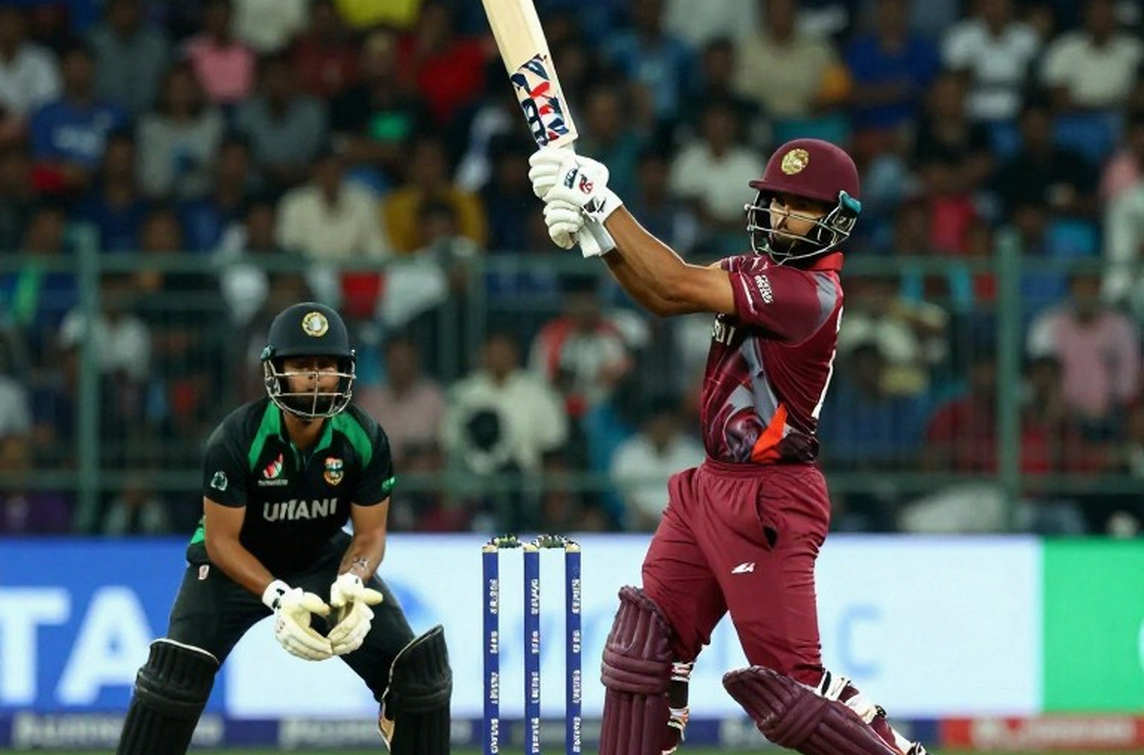
South Africa versus Australia, the third day of the Durban Test. The Kingsmead pitch was moving at two speeds — sometimes kicking up, sometimes staying low. Captain Temba Bavuma had faced 26 balls for three singles; a strike rate of about 11.5. When a set captain, on his own soil, chooses a shot as risky as a reverse sweep against the off-spinner Nathan Lyon, that is not an attacking decision — it is an attempt to escape pressure. The ball went to first slip, into Steve Smith's hands. It was the first of three catches that day.
The third came at second slip, off a steeply climbing Pat Cummins delivery that Bedingham could not keep down. Three catches in one innings by a non-wicketkeeper fielder. After play, Lyon called Smith a freak — because he moves before he has fully read the ball's path. Ashwell Prince, the opposition coach, also praised Smith's anticipation. This piece is not a repetition of that praise. It wants to see which ledger is being read out behind the praise, and which one is being kept quiet.
The context is Test cricket. A five-day match, a game of session-by-session attrition, and the third day is called moving day — the day on which the weight of the match is usually decided. The first Test of Australia's Qantas tour of South Africa 2026 is being played at Kingsmead, Durban, from October 9 to 13. The series then moves from Durban to Gqeberha, then to Cape Town — three Tests between October 9 and 31, continuous travel and continuous play.
The broadcast picture is worth noting. In Australia the match is shown exclusively on Kayo and Fox Cricket. It starts at 9:30 am local time, but in Australia the clock reads 6:30 pm — prime time. The timing has been set for the distant viewer's habits, not for the local crowd's convenience. In 2026, after 32 days at the Russia World Cup, I saw that remote-command model — broadcasting from outside the venue, controlling audience and schedule together — and Durban's evening scheduling is a small version of it.
Both sides are near full strength. Australia's batting line-up has Head, Labuschagne, Smith, Green, Webster and Carey; the bowling has Cummins, Starc, Hazlewood, Boland and Neser, with Lyon and Kuhnemann in spin. South Africa has Rabada, Nortje, Jansen, Coetzee and Paterson — an elite pace unit, with Maharaj, Harmer and Muthusamy in spin. This is no second-string series. That is exactly where the weight of Smith's catches grows, because the opposition is strong and the environment hostile.
Now the real ledger. Smith's slip-catching tally now stands at 223 — the most by any non-wicketkeeper in men's Tests. Behind him: Joe Root 220, Rahul Dravid 210, Mahela Jayawardene 205, Jacques Kallis 200. Read those five names together and it is clear this is not a single day's excitement — it is a decade and a half of work. The number 223 is not the event of one innings; it is the accumulation of field placement, ball-reading habit and daily, ceaseless training.
The second number is more tactical. The Lyon–Smith pairing has produced 65 bowler–fielder dismissals — second on the all-time list. At the top are Muttiah Muralitharan and Jayawardene, with 77. The gap is 12. This number is not just a curiosity; it is evidence of long-term coordination. Lyon knows where Smith will stand at slip, Smith knows where Lyon will bowl — that understanding is built over years, not one series.
I remember 2026, the Abahani Limited Dhaka training ground. Forty-six sessions, a Session Intensity Card built with the fitness coach, RPE and sprint-load for 24 players. That work taught me that what cannot be measured does not improve. Slip catching is exactly such a skill — it shows up in a catch count, but the posture, the pre-movement and the body position behind it appear in no ordinary statistic. Smith's 223 is therefore a summit; beneath it lie countless invisible sessions.
The age question also arrives here. Smith is 37. A batter's reflexes typically peak between 27 and 33, then decline. Yet he has reclaimed the top spot from Root, and took several remarkable catches in last summer's Ashes. Lyon's explanation — that he premeditates — is really saying that Smith is not slowing his reaction speed; he is reducing the need to react at all. That is the only effective way to play against the age curve, and it is cognitive, not physical.
The two dismissals that day — one off spin, one off seam — give another clue. If the pitch were only turning, a Cummins delivery would not have kicked up to slip like that; if it were only seaming, Lyon would not have found that much turn. So the surface was probably one of variable bounce and moderate turn — a Test pitch in its difficult phase. Bavuma's three runs from 26 balls is therefore testimony not to weak batting but to successful scoring suppression. In 2026, after 87 days at the Mohammedan SC bio-secure camp, talking to 23 players and staff and matching contracts against payment dates, I learned that the scoreboard's arithmetic never tells the whole story; the ledger does. Here too: three runs tell of Bavuma's struggle, but not of what the pitch was actually doing.
Now the side this report does not itself state. The piece was published by cricket.com.au — that is, Cricket Australia's own editorial arm. That is no crime, but it changes the rules of reading. Freak, record-breaking, unbelievable — all the praise comes either from a teammate's mouth or an opposition coach's; there is no reaction from any South African player. An opposition voice is a sign of honest journalism, but a team's own platform praising its own player also does promotional work.
There is another gap. That he is better than ever rests on one day's evidence. The record is career-long, but three catches are one innings. A single day cannot be called a trend. In the same way, the flash of praise buries Australia's real risk: the 37-year-old Smith, Lyon, Starc and Hazlewood — an ageing spine. This spine is performing now, but it is also moving closer to retirement. Who is Smith's replacement at slip? A first-slip fielder against spin who relies on such anticipation is not easily found. In team planning, that answer is the weakest, and this piece does not ask it.
The catch-race between Smith and Root is a living record — as long as both play, the top spot will keep changing hands. So the real signal is not any single number. Two things to watch in the second Test at Gqeberha: whether South Africa's top order can change its game against variable bounce, and how long Australia's ageing spine stays intact under three consecutive Tests. Three catches at Durban are excitement; but the real question is not of performance, it is of durability.
Related Players
Recommended
Overs Seven to Fifteen: Where Bangladesh's Batting Architecture Actually Leaks2026-09-29
The Season of Empty Files: Ghosts of Data in Cricket's Rumor Market2026-10-10
The Middle Overs Decide Trophies: The Unseen Arithmetic of a T20 World Cup2026-09-30
Captains of the Quiet Room: The Incomplete Archive of West Indies Test Leadership2026-10-08
The Archive of Absence: The Cricket Data That Was Never Written Down2026-10-04
Bartlett's Spell and Peirson's Century: The Truth Buried Inside WA's Collapse2026-10-10
Recommended
115 Balls, 3 Boundaries at Durban: Opening the Injury Ledger on Matt Renshaw's Century2026-10-12
Rawalpindi's 146: The Variable the Scoreboard Never Shows2026-09-24
The Verified Ledger: Cricket, Blockchain and the New Culture of Verification2026-10-07
The On-Chain Ledger: How Injury Data Became a Priced Asset in the Transfer Window2026-09-28
An Empty Cell Is Not a Zero: Cricket Data, Blockchain Verification and the Real Arithmetic of the Transfer Window2026-10-07
One Channel, an Old Ball, and 18 Years of Patience: The Day Reverse Swing Split Bangladesh's Innings2026-10-10